


chevron_left
-
 play_arrow
105.1 TMC 105.1 TMC
-
play_arrow
Cebu Calling Podcast Kuya Magik
United States President Donald Trump and Iran’s president signed an agreement on Wednesday aimed at ending months of conflict in the Middle East, with Tehran agreeing to dilute its stockpile of enriched uranium in exchange for significant economic relief and the easing of sanctions.
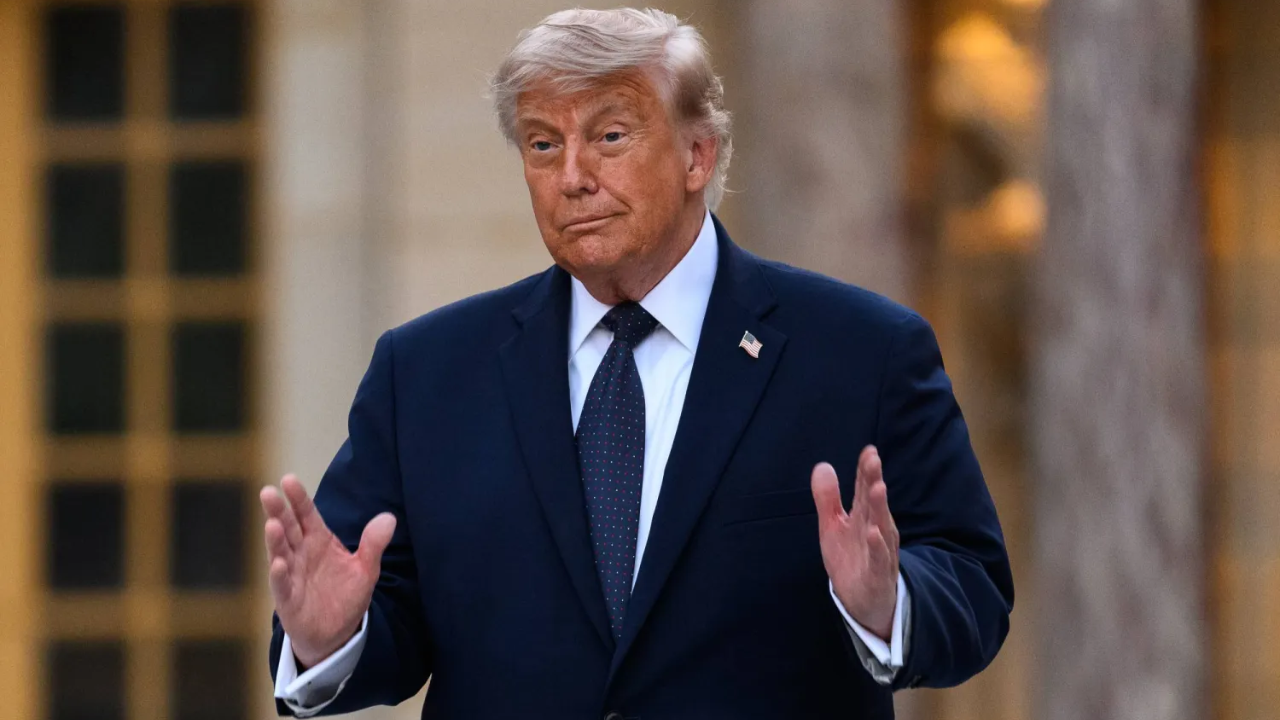
The memorandum of understanding was signed following the conclusion of the Group of Seven (G7) summit in France. A U.S. official told AFP that Trump signed the document during a dinner with French President Emmanuel Macron at the Palace of Versailles.
“Just signed it,” Trump told reporters as he emerged from the palace.
Iran also confirmed the signing of the agreement. Iranian Foreign Ministry spokesman Esmaeil Baqaei, quoted by state-run news agency IRNA, said the document “was finalized with the signatures of the presidents.”
The agreement is intended to bring an end to the conflict that erupted on Feb. 28 when the United States and Israel launched military operations against Iran.
Tehran responded with missile and drone attacks across the region, escalating tensions and disrupting maritime traffic through the Strait of Hormuz, one of the world’s most critical oil shipping routes.
The deal establishes a framework for de-escalation and opens a two-month period of negotiations focused on Iran’s nuclear program and broader regional security concerns.
“Now it is time to test the implementation of the agreement,” Baqaei said.
Under the terms released by U.S. officials, Washington will immediately waive oil sanctions that have heavily impacted Iran’s economy.
The agreement also provides that once a final accord is reached regarding Iran’s nuclear activities, the United States will facilitate the release of a $300 billion reconstruction fund backed by regional countries.
A U.S. official clarified, however, that Washington would not be required to contribute financially to the reconstruction fund.
A central component of the agreement requires Iran to dilute its enriched uranium stockpiles.
According to the document, the process could involve “down-blending on site under the supervision of the IAEA,” referring to the International Atomic Energy Agency, the United Nations nuclear watchdog.
The uranium provision is seen as an initial confidence-building measure while negotiators work toward a broader and more comprehensive arrangement governing Iran’s long-term nuclear activities.
The agreement had originally been expected to be signed by Iran’s chief negotiator and parliament speaker Mohammad Bagher Ghalibaf and U.S. Vice President JD Vance. Iranian officials later announced that a formal in-person signing ceremony was no longer necessary.
Despite agreeing to the framework, Iranian officials characterized the outcome as a setback for Washington rather than Tehran.
“People will see it and judge,” Ghalibaf said on state television after the text of the agreement was released.
The deal has generated mixed reactions internationally and within the United States.
China welcomed the development and emphasized the importance of honoring the commitments outlined in the agreement. Beijing said its top diplomat had conveyed to Tehran that it was “key” for all parties involved to “genuinely implement” their obligations.
In the United States, however, some political allies of Trump criticized the arrangement.
Trump earlier warned that military action remained an option should Iran violate the terms of the agreement.
“I was prepared to bomb the hell” out of Iran if the deal were breached, the U.S. president said.
Republican Sen. Bill Cassidy sharply criticized the accord, arguing that it failed to sufficiently address concerns over Iran’s nuclear ambitions.
“Iran’s nuclear ambitions were not curbed, and they have learned that threatening the Strait of Hormuz works,” Cassidy said. “Sanctions will be lifted, and the bombing has stopped. This is the worst foreign policy blunder in decades.”
The agreement was welcomed by Iran’s regional allies, including Hezbollah in Lebanon.
Hezbollah leader Naim Qassem described the deal as a “great victory” for Iran and thanked Tehran for ensuring that Lebanon was included in the ceasefire arrangements.
The conflict had expanded beyond Iran and Israel after Hezbollah launched rockets toward Israel on March 2 in support of Tehran, drawing Lebanon into the broader confrontation.
While violence in Lebanon has declined since the announcement of the agreement, tensions remain.
Lebanese state media reported that Israeli strikes in southern Lebanon have killed at least five people since the deal was announced, while Israeli authorities reported continued security incidents.
The Israeli military said five soldiers were wounded Wednesday, including one seriously, after an explosive drone struck southern Lebanon. The military also reported intercepting several rockets launched toward Israeli troops operating in the area.
Meanwhile, global markets continued to monitor developments closely. Oil prices, which had fallen amid growing optimism over a potential peace agreement, briefly surged by as much as five percent Wednesday due to uncertainty surrounding the signing before stabilizing later in the day.
Negotiators from both sides are expected to begin detailed discussions in the coming weeks as efforts continue toward a comprehensive agreement addressing Iran’s nuclear program and broader regional security issues.