


chevron_left
-
 play_arrow
105.1 TMC 105.1 TMC
-
play_arrow
Cebu Calling Podcast Kuya Magik
Seeing cats and dogs in random areas around the city is nothing new. Whether they are regularly fed or completely abandoned, stray animals have long been part of everyday life in Cebu.
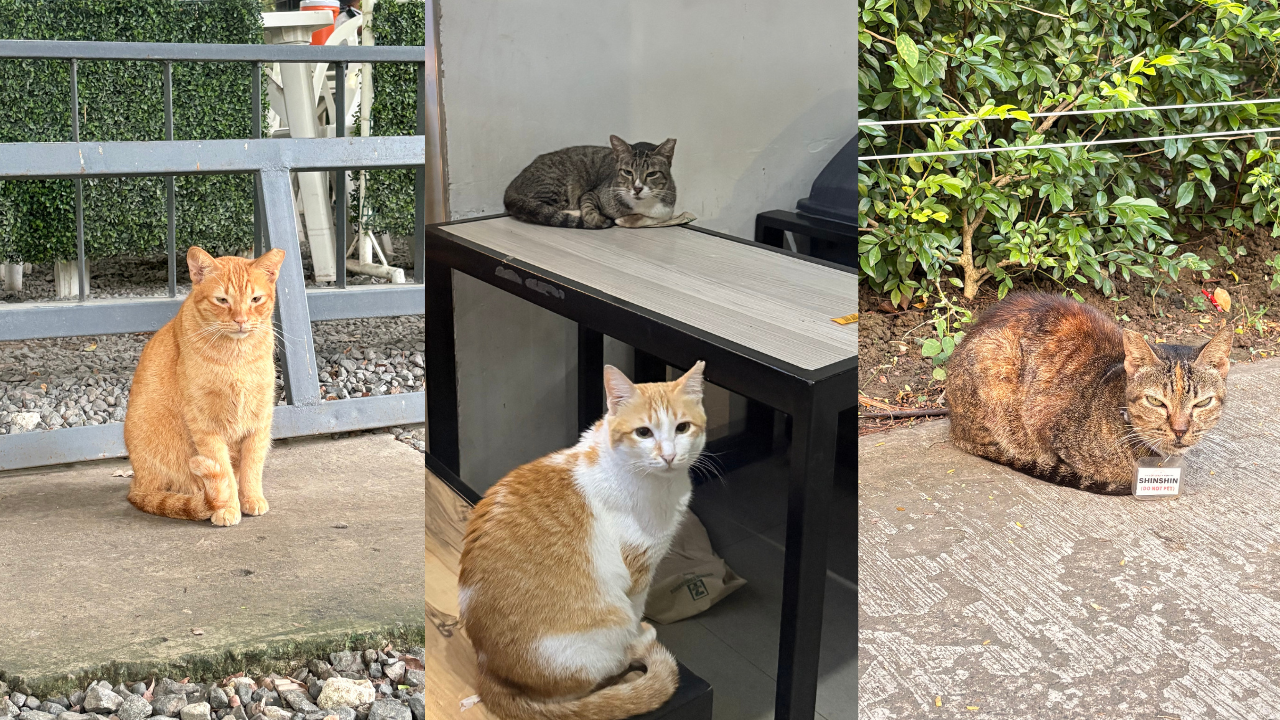
“Pspspspspsps.” The sound cut through the usual city noise as a small group gathered, calling to a group of cats that came running from different corners of the street. Two even wore makeshift tags, Caesar and Oreo.
Food was laid out, and one by one, the cats settled in. For a moment, it didn’t feel like they were strays, but it felt like looking at pets that are well taken care of.
In a country where thousands of stray animals are added to the streets each year, scenes like this feel unexpected. Not all cats, or stray animals in general, are lucky enough to be fed, named, or cared for. Many still face hunger, neglect, and danger every day. According to Polias (2025), an estimated 100,000 to 500,000 stray cats and dogs are added to the streets each year.
Yet despite these realities, Cebu has a different culture surrounding stray animals that has slowly emerged, one where cats and dogs are no longer simply viewed as nuisances wandering urban spaces, but as “community cats.”
Unlike the usual image attached to stray animals, these community cats are fed every day by volunteers, recognized by daily passersby, and included in organized care efforts like donation drives and TNVR initiatives.
Stray vs. Community Pet
“Stray animals” are defined as pets that have been abandoned and are forced to fend for themselves, often resulting in a life of scavenging and living outside domesticated environments. A community animal or community cats, however, suggests belonging.
This label shifts the animal from something unwanted into something shared and cared for by the community. This change reflects something deeper about Cebuano culture and values.
The growing presence of volunteers and animal care initiatives reveals the Filipino’s “bayanihan” where ordinary people do something good out of their own free will, for the benefit of others, and without expecting anything in return. (Mojica, 2016) Across Cebu City, volunteer groups and animal welfare organizations have started creating spaces where these animals are not entirely abandoned.
Daily feeding initiatives and TNVR programs have become increasingly visible in commercial areas in Cebu. One example is an organization founded in 2022, as it now consists of volunteers who take turns daily for feeding and monitoring the cats around Cebu IT Park.
TNVR or Trap – Neuter – Vaccinate – Return has become one of the most promoted long-term solutions for community animal management. Through this, cats and dogs are safely trapped, neutered or spayed, vaccinated, and returned to their territory after recovery to prevent further overpopulation.
According to animal welfare advocates, TNVR not only controls population growth but also improves animal behavior and health.
One volunteer, “Chan,” explained that TNVR helps lessen aggression and overpopulation among stray cats. Another veterinarian also emphasized that spaying and neutering also reduces spraying and certain health complications that shorten cats’ life spans.
“I am an advocate for spay and neuter that’s why I do my part in offering cheap and affordable services for this.”
These visible efforts reflect Cebu’s growing image as a pet-friendly city. In 2024, Cebu was named Asia’s second most pet-friendly destination by global travel platform Agoda. (Tabiolo, 2025) Just recently, the Philippine Animal Welfare Society (PAWS) also awarded Ayala Center Cebu its certified Pet Friendly Seal after recognizing the mall’s inclusive policies for animals regardless of breed or size.
Animal welfare organizations like Island Rescue Organization (IRO) and Mayari Animal Rescue Organization (MARO) have also strengthened Cebu’s animal welfare movement through rescue initiatives, adoption drives, TNVR efforts, and rehabilitation.
Although Cebu has gathered many positive developments, there is still an uncomfortable reality present. The rise of “community cats” has revealed gaps in larger systems that initially had the goal to address stray animal welfare issues.
There has been an increasing dependence on volunteers and donations, which highlights how much animal welfare still continues to rely on private citizens rather than fully institutionalized programs. Although a number of LGUs have already organized low-cost or free spay and neuter initiatives, the stray population continues to grow.
One volunteer stated that, “naa naman libre or cheap neuter and spay initiatives sa LGU but I think it is still evident na taghan gihapon stray dogs and cats that aren’t neutered.”
Cases of neglect and cruelty also remain. Earlier this year, authorities in Naga, Cebu, investigated the mass poisoning of at least 50 stray cats and dogs inside a private subdivision. Cases like this create a contradiction within Cebu’s evolving relationship with stray animals.
While the city is becoming increasingly compassionate towards animals–with residents viewing community cats and dogs as harmless companions rather than pests, with strangers describing the animals as “stress relievers” and appreciating volunteers who spend hours feeding them daily–compassion and volunteerism alone cannot solve the issue.
These efforts may sustain these animals temporarily, but at the end of the day, it cannot replace long-term systemic solutions involving stricter implementation of animal welfare laws, stronger population control programs, and greater accountability for irresponsible pet ownership.
To sum up, “community cats” represent both progress and failure at the same time. They reflect Cebu’s growing compassion and “bayanihan” not just towards people, but now extending towards animals too.
They also reveal the absence of enough large-scale systems capable of actually preventing overpopulation and abandonment altogether. However, Cebu has evolved and is indeed different, as Cebuanos have chosen NOT to completely ignore these animals despite these gaps.
In the busy city streets, stray cats and dogs are often expected to disappear into the background, but now they are instead named, fed, and remembered. Caesar and Oreo may still be technically “strays,” but in many ways, they have already become members of the community.
Article by – Zennia Andrea Alforque, TMC Intern