


chevron_left
-
 play_arrow
105.1 TMC 105.1 TMC
-
play_arrow
Cebu Calling Podcast Kuya Magik
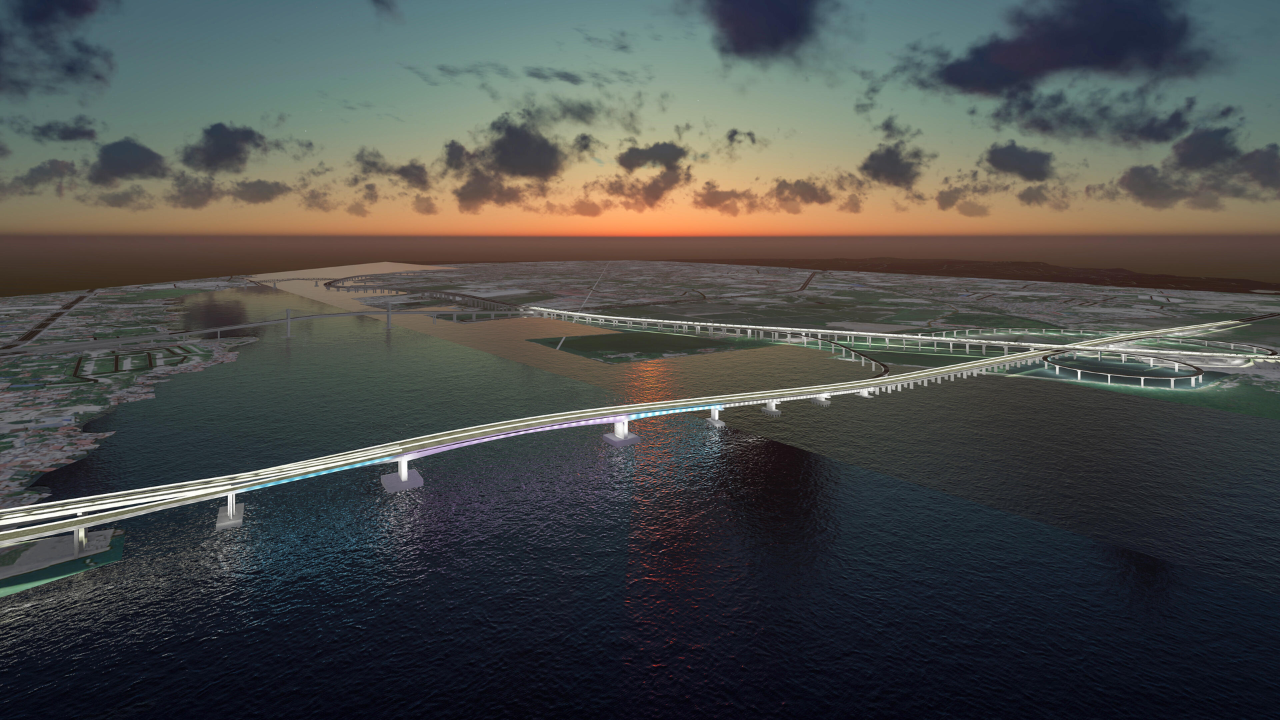
A proposed coastal highway that would connect the northern and southern parts of Cebu Island has moved closer to implementation after being endorsed to the Regional Development Council (RDC) for a feasibility study, provincial officials said.
The project, which aims to establish a major transportation corridor along Cebu’s coastlines, is being considered as a long-term infrastructure initiative intended to improve connectivity, reduce traffic congestion, enhance road safety, and support economic growth across the province.
Cebu Governor Pamela Baricuatro said the proposal was discussed during an RDC meeting earlier this year, where Fourth District Representative Sun Shimura presented the concept of a coastal road as an alternative infrastructure project. The proposal has since been forwarded to the RDC for a feasibility study scheduled for 2027.
According to Baricuatro, a favorable outcome from the study could pave the way for construction to begin as early as late 2027 or in 2028.
“Connectivity is very important for economic growth,” said Baricuatro.
Provincial officials said the proposed highway would provide a continuous route linking Cebu’s northern and southern municipalities through coastal areas, creating an alternative transportation network that could ease pressure on existing national roads.
Shimura said the project has the potential to stimulate economic activity throughout the province by improving mobility for residents, businesses, and tourists. He added that the project could eventually follow a model similar to major toll roads operating in Luzon.
“Since we are a premiere province if we can do it and we can check on the feasibility if maayo ba sad siya economically,” said Shimura.
(Since we are a premier province, let’s see if we can do it and we can check on the feasibility to see if it is also economically viable.)
He also emphasized the possible economic benefits arising from increased travel and tourism.
“We can just base on the public transport. Not to mention the tourists, the private tourists, so maka-generate sad gyud ni og economic development maka-spur gyud sa economy sa atong probinsya,” Shimura added.
(We can just base it on public transport. Not to mention the tourists, the private tourists, so this will really generate economic development and truly spur the economy of our province.)
Provincial authorities said planning for the project remains in its early stages, with route details, financing mechanisms, and implementation strategies still subject to further study and evaluation.
“We are not yet complete with the plan (because) it will go through the feasibility study,” Baricuatro said. “Naay budget for a feasibility study, but we would look how we are going to finance. It could be [Public-Private Partnership] it could be mang loan ang province. We’ll see.”
(There is a budget for a feasibility study, but we will look into how we are going to finance it. It could be a Public-Private Partnership, or the province could take out a loan. We’ll see.)
Under the preliminary concept presented by Shimura, the northern segment of the proposed road would begin on the eastern side of Daanbantayan and continue through the municipalities of Medellin and Tabogon. He said officials from the Department of Public Works and Highways (DPWH) Region 7 have already sought recommendations regarding potential starting points for both the northern and southern portions of the project.
Shimura noted that portions of existing coastal roads constructed during the tenure of Fifth District Representative Duke Frasco could be integrated into the larger network, potentially reducing construction requirements in some areas.
Funding remains one of the key issues to be addressed. With the 2026 national budget already finalized, officials said the project may seek inclusion in the 2027 national budget. Shimura also expressed support for private sector participation to accelerate development.
“I proposed na masugdan lang sa atoang DPWH and then if there’s a third party that would want to come in, it would be better,” Shimura said.
(I proposed that we just start with our DPWH and then if there’s a third party that would want to come in, it would be better.)
Beyond economic considerations, officials highlighted the road’s potential safety benefits. The proposed coastal route is expected to function as a bypass road, diverting long-distance traffic, buses, and tourist vehicles away from heavily populated town centers and existing national highways.
Shimura said reducing traffic on current routes would be particularly beneficial for students and pedestrians living near major roads.
“First is safety. That’s what I manifested there in the RDC…It will greatly help the safety of our children,” said Shimura. “Muagi ka’g national highway nga schools more or less 37 ka schools imong maagian, imagine the safety of the kids nga mangagi sa national highway,” Shimura added.
(If you pass through the national highway, you will pass by more or less 37 schools; imagine the safety of the kids who walk along the national highway.)
The feasibility study is expected to determine the project’s economic viability, engineering requirements, environmental impact, and funding options. Provincial officials said the findings will guide future decisions on whether the proposed coastal highway will move forward to the construction phase.
If implemented, the project would become one of Cebu’s largest transportation infrastructure initiatives, potentially reshaping mobility across the province while supporting economic development and improving road safety for local communities.