


chevron_left
-
 play_arrow
105.1 TMC 105.1 TMC
-
play_arrow
Cebu Calling Podcast Kuya Magik
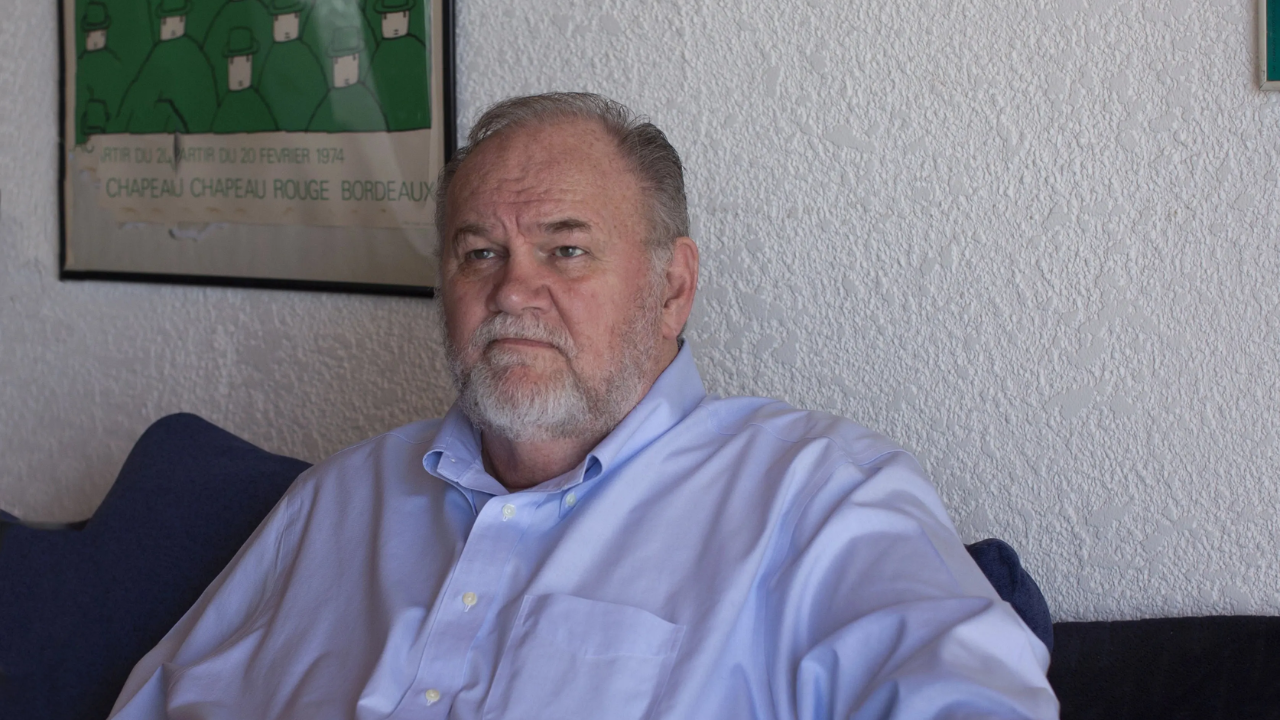
Philippine authorities are coordinating with law enforcement agencies in the United States and the United Kingdom to investigate allegations that Thomas Markle, father of Meghan Markle, possessed child sexual abuse material while based in Cebu.
Philippine National Police (PNP) Chief Gen. Jose Melencio Nartatez Jr. said on Sunday, Oct. 25, 2026, that international cooperation is crucial in investigating suspected child exploitation cases involving digital evidence and individuals with links to multiple countries.
“The safety of our children remains a priority. Those who try to engage in child exploitation often extend beyond borders and, as such, it emphasizes the importance of strong coordination with our foreign counterparts,” Nartatez said.
Interior and Local Government Secretary Jonvic Remulla confirmed that Markle is under investigation over allegations involving the possession of child sexual abuse material (CSAM).
Remulla said Markle had been living in Cebu, although authorities were still verifying whether he had returned to the United States.
According to Remulla, Markle’s laptop is undergoing forensic examination. Authorities also found his belongings at his former residence in Cebu.
Markle has denied the allegations, according to published reports.
As of Sunday, authorities had not announced any criminal charges against him, and the results of the forensic examination had not been made public.
Nartatez said the PNP would pursue appropriate legal action if evidence establishes Markle’s involvement in the online exploitation of minors.
Child exploitation cases in Central Visayas
The investigation comes amid continuing concerns over online sexual abuse and exploitation of children (OSAEC) in Central Visayas, where authorities have reported cases involving adults exploiting minors and children being manipulated into producing sexual content.
In 2025, the Department of Social Welfare and Development (DSWD) 7, working with the PNP and the National Bureau of Investigation, rescued at least 50 children from OSAEC in the region. The victims included 32 girls and 18 boys.
The figure was higher than the 42 cases documented in 2023, although the numbers should not be directly compared without confirming whether the same reporting definitions were used.
DSWD 7 said offenders may manipulate or entice children through offers tailored to their interests. Authorities reported that transactions associated with OSAEC cases ranged from P10,000 to P20,000 per instance.
The agency also cautioned against viewing poverty as the sole factor behind child exploitation, noting that some offenders come from families that are not classified as economically disadvantaged.
A 2020 study by the International Justice Mission (IJM), conducted in collaboration with the US State Department and the Philippine government, identified the Philippines as a major source of online sexual exploitation of children.
The study recorded 237 case referrals received by the Philippines from foreign law enforcement agencies. It also reported that Philippine anti-trafficking units handled 43 cases in 2017, compared with one in 2014.
Study highlights risks to children
The IJM research examined cases involving livestreamed child sexual abuse, in which overseas customers paid to direct abuse through live video. Financial transactions facilitated the exploitation, and researchers identified a financial motive in 83 percent of the cases reviewed.
The study identified 381 victims across 90 cases. Their median age was 11, and some were infants.
Among victims whose relationship to the trafficker was known, 41 percent were abused by a biological parent, while 42 percent were abused by other relatives.
Two-thirds of the traffickers in the cases reviewed were women, and 96 percent were Filipino. All identified customers were men aged 40 to 72, most of them from the United States, Sweden and Australia.
Researchers estimated that the number of internet protocol (IP) addresses associated with child sexual exploitation in the Philippines increased from about 23,000 in 2014 to nearly 82,000 in 2017. They cautioned, however, that the increase could reflect a rise in offending, improved reporting, or both.
The study recommended stronger detection of online child sexual abuse material, mandatory reporting requirements and increased funding for Philippine anti-trafficking units.
IJM also reported that 63 of its 76 convictions since 2011 resulted from plea agreements intended to spare child victims from having to testify.
Authorities have yet to publicly establish the findings of the forensic examination involving Markle. The investigation remains ongoing, and any criminal liability would depend on the evidence gathered and the outcome of legal proceedings.




Post comments (0)