


chevron_left
-
 play_arrow
105.1 TMC 105.1 TMC
-
play_arrow
Cebu Calling Podcast Kuya Magik
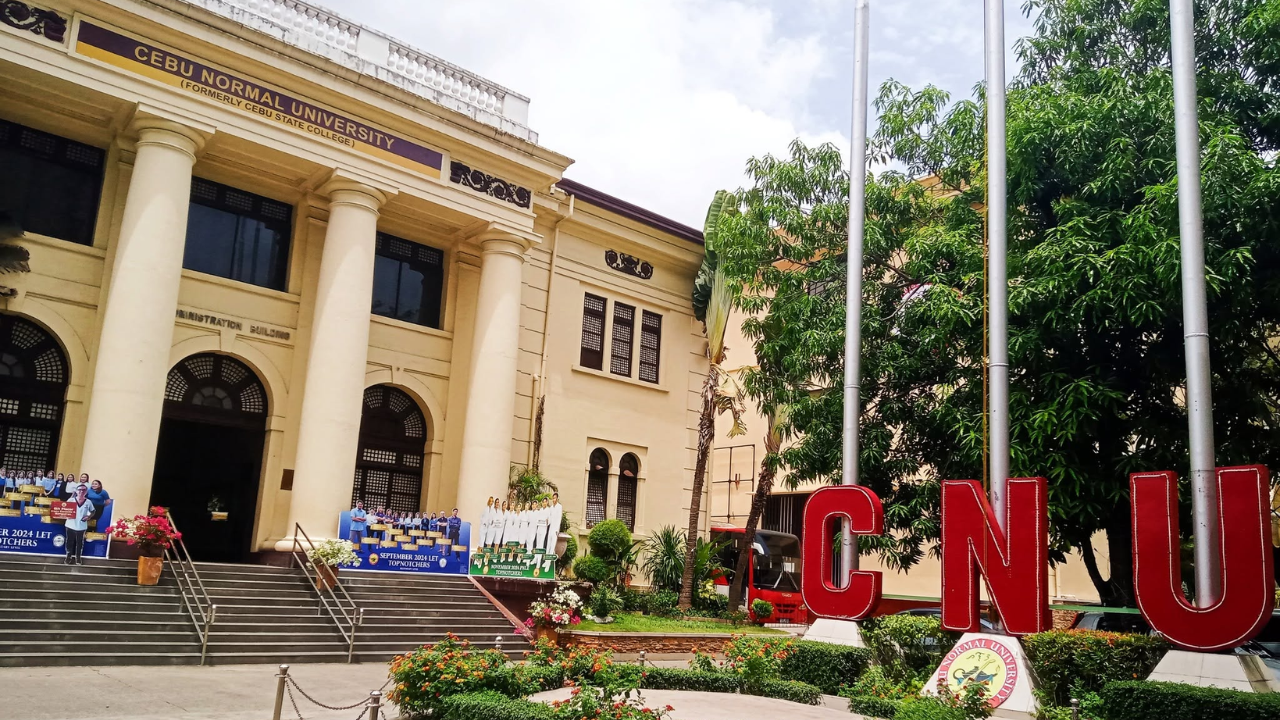
The Commission on Audit (COA) has flagged Cebu Normal University (CNU) over its P947.83-million smart hub project, citing procurement irregularities, questionable payments for a partially delivered learning management system, and delays that left millions of pesos worth of equipment unused in storage.
In its 2025 report, state auditors said CNU paid P262.75 million for a learning management system (LMS) whose modules were certified as partially delivered and remained untested. The findings raised concerns about whether the payment had a valid contractual basis and whether procurement rules had been followed.
CNU signed the project contract with a supplier on Oct. 1, 2024. The project covers smart classrooms and e-laboratories, an e-library, the LMS, network components, tablets and laptops.
As of Feb. 24, 2026, the project was only 34.29 percent complete, despite having a target completion date of Sept. 29, 2025.
The contract was signed before Dr. Laurence Garcia assumed office as CNU’s seventh president on Feb. 2, 2026. He succeeded Dr. Daniel Ariaso Sr.
Questionable LMS payment
COA reported significant discrepancies between the approved budgets and winning bids for components of the project.
The winning bid for the LMS reached P307.23 million, or 759.14 percent above its P35.76-million budget. A component that included Human Virtual AI was bid at P204.455 million, compared with its P15-million budget, exceeding the estimate by 1,263.03 percent.
Although bids for six other components were substantially lower and the overall amount remained within the P950-million budget, auditors said they could not establish the reasons for the large price differences because the bidding documents lacked detailed cost estimates.
The university paid P262.75 million, representing the full cost of the LMS’s four modules. However, an inspection certificate dated May 15, 2025, indicated that the modules had been partially delivered for entitlement purposes and could only be tested after system analysis and completion of the project.
COA noted that the contract did not specify terms for progress payments, raising questions about the basis for releasing the full amount.
The Bids and Awards Committee (BAC) defended the payment, arguing that the LMS accounted for 27.70 percent of the total project cost and that inspectors had assessed overall project completion at 28.80 percent.
Auditors countered that the LMS’s 27.70-percent share of the contract price did not, by itself, justify full payment for modules that had not been fully delivered and tested.
Subcontracting and bidding concerns
Auditors also questioned the arrangement for developing the LMS, which accounted for 32.4 percent of the contract and potentially exceeded the 20-percent subcontracting limit for goods contracts.
In April 2025, the supplier replaced its original LMS partner with another company. The CNU Board of Regents (BOR) confirmed the change on May 14, 2025, but eligibility documents for both firms were not submitted, according to COA.
The university accountant had warned the president on June 21, 2025, that the arrangement constituted subcontracting and that the portion involved would not qualify for payment.
Five days later, the supplier declared under oath that the replacement company was only a reseller. However, COA noted that the company was identified as the LMS developer in the warranty certificate.
The BAC maintained that the LMS was existing commercial software that had not been developed specifically for CNU. An IT official, however, had told prospective bidders during the pre-bid conference that the supplier was required to develop the system and turn over its source code.
COA said the conflicting information could have misled potential bidders.
The auditors also found that bidding documents lacked plans, drawings and detailed cost estimates for classroom conversions. The winning bid included a P28.25-million tablet component that was not listed as a separate component in the bidding documents, which COA said could have been grounds for disqualification.
The bid evaluation and its report were completed on the same day, July 23, 2024.
COA further found that the BAC did not verify the supplier’s declared ongoing contracts, some of which showed signs of delay. Instead, the committee sought clarification from the bidder, which auditors said indicated a possible violation of the no-contact rule.
Equipment left in storage
Delays in project implementation also left 1,000 iPads worth P28.25 million in storage at CNU’s Tandang Sora Hall from May 14, 2025, until COA’s inspection in March 2026.
The tablets remained undistributed even as their one-year warranty period was running from the date of delivery.
The university also stored equipment that had not yet been accepted. Of 280 MacBooks delivered, 141 lacked property acknowledgment receipts.
The hall, previously used for university events, had been occupied by the stored equipment, prompting auditors to call for appropriate storage arrangements and the restoration of the venue’s intended use.
Other procurement concerns involved the prices of equipment. Thirty-four interactive display boards were bid at P470,000 each, compared with a reported market price of approximately P188,954 per unit. COA estimated the difference at about P9.56 million.
The BAC said the budgeted price included installation, freight, training and inflation.
Auditors also questioned BOR Resolution 266, which awarded the contract on Aug. 30, 2024. The resolution lacked the signature of the board chairperson, a Commission on Higher Education commissioner who attended the meeting. COA said the requested meeting minutes had not been provided.
Project suspension and corrective measures
Work on the project was suspended at the supplier’s request following the Sept. 30, 2025, earthquake in Bogo City. The suspension was pending clearance from the Office of the Building Official, which remained unissued during the COA inspection.
On Oct. 21, 2025, the BOR granted the supplier a 120-day extension.
CNU management agreed to COA’s recommendations, including conducting a comprehensive review of the LMS procurement to determine whether the supplier complied with the requirements.
The university also committed to submitting an LMS status report, providing the signed BOR resolution or an explanation accompanied by the meeting minutes, and furnishing the supplier’s deed of undertaking and catch-up plan.
For the stored equipment, COA recommended that CNU secure suitable storage, issue property acknowledgment receipts for distributed laptops and schedule future deliveries only when facilities are ready to receive them.
Auditors also urged the university to consider obtaining a written undertaking from the supplier that the equipment warranty would begin upon installation or actual use rather than delivery.
For future procurement activities, CNU committed to publishing complete plans and technical specifications and verifying the ongoing contracts declared by bidders.
COA did not issue any notice of suspension or disallowance to CNU in 2025. However, older notices covering transactions from 2011 to 2022 left P400,550.19 in suspensions and P14.52 million in disallowances unsettled as of Dec. 31, 2025.




Post comments (0)