


chevron_left
-
 play_arrow
105.1 TMC 105.1 TMC
-
play_arrow
Cebu Calling Podcast Kuya Magik
Video games are a masterclass in boundless creativity. They possess the rare, brilliant ability to build worlds from scratch, inspire intricate narratives, and allow players to explore both fortunate and unfortunate circumstances within a safe, digital boundary. Yet, despite this wealth of artistic expression, the medium is consistently subjected to the worst kind of societal scapegoating.
This regressive attitude has taken center stage in the current Philippine climate. Historically, the moral panic surrounding virtual violence isn’t entirely new; the late 1990s and early 2000s saw global outcries over titles like Grand Theft Auto or Call of Duty for their graphic themes and harmful mechanics.
However, even back then, the wider public largely dismissed gaming as a relatively harmless, albeit edgy, pastime. Today, that perception has shifted from casual dismissal to active fear: Video games are now painted as a toxic influence to the younger generation, an infectious entity that parents must shield their children from at all costs.
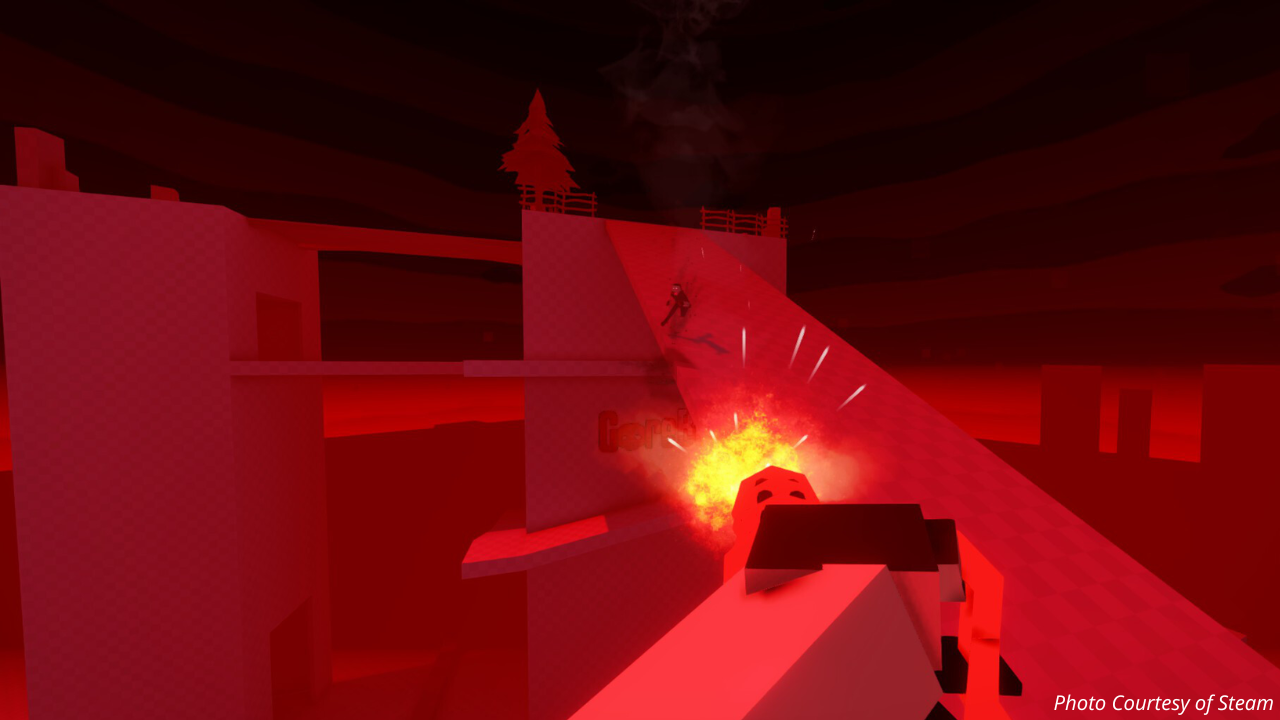
This fear culminated in a massive turning point on June 23, when the Philippine government moved to ban GoreBox, a physics-based sandbox game developed by Felix Filip and F2Games, a German indie studio.
The ban was catalyzed by a tragic school shooting that occurred a few days prior, with authorities and critics quickly pointing towards the game’s violent nature as the primary culprit behind the perpetrator’s actions.
But pinning real-world tragedy on digital pixels ignores a glaring, historical truth: violence and school shootings have existed long before video games, driven by deep-seated socioeconomic issues, mental health crises, and systemic failures.
Even globally, where the “video games are harmful” defense is frequently deployed after a tragedy, many studies and data shows that gaming is an outlier, and not the root cause.
While critics might push back against defending a title like GoreBox, asking how a game centered on shooting and graphic gore can possibly be considered an art form, the answer actually lies not in the violence itself, but in the medium’s capacity for conveyance.
Yes, it depicts shooting, and yes, it features gore, portraying actions that no one should ever enact in reality. But within its blocky, stylized world, it represents limitless possibility. It is a sandbox for physics, logic, and user-driven mechanics.
To reduce an entire spectrum of digital craftsmanship down to its base elements, and to ban it under the guise of an easy fix is a profound disservice to the overall art form.
Defending the medium against this ban will undoubtedly draw accusations of missing the point. Critics will argue that society hasn’t condemned gaming as a whole.
After all, local esports such as VALORANT and Mobile Legends: Bang Bang continue to thrive in the scenes, and mainstream titles remain completely untouched. The public willingly accepts that “not all games are bad.”
But this selective outrage reveals a deeper hypocrisy. By segregating the medium into “harmless pastimes” and “isolated evils,” the public creates a comforting but false dichotomy. Banning GoreBox becomes a convenient act of security theater.
It allows institutions and onlookers to feel as though a decisive blow has been struck for youth safety, all while ignoring a glaring reality: GoreBox was never meant for children in the first place.
The developers explicitly labeled and targeted the game for an 18+ audience, openly acknowledging its graphic themes. The industry provided the necessary guardrails through age ratings, yet those boundaries were completely ignored in the household.
When a tragic event occurs because a minor accesses content clearly designated for adults, it is a failure of parental gatekeeping and systemic enforcement, not a failure of the art form itself.
By treating GoreBox as a corruptive anomaly rather than enforcing the rules already in place, society effectively passes the buck of accountability. This dynamic reveals a flawed ecosystem where the immediate restriction of access is valued over the long-term, active education of morals.
Ultimately, it is truly unfortunate to see such a wonderful, immersive medium defiled and reduced to a societal scapegoat, simply because it is easier to ban a game than it is to address the complex reality of our youth’s current ecosystem.
Article by – V.G. Cruz, TMC Intern