


chevron_left
-
 play_arrow
105.1 TMC 105.1 TMC
-
play_arrow
Cebu Calling Podcast Kuya Magik
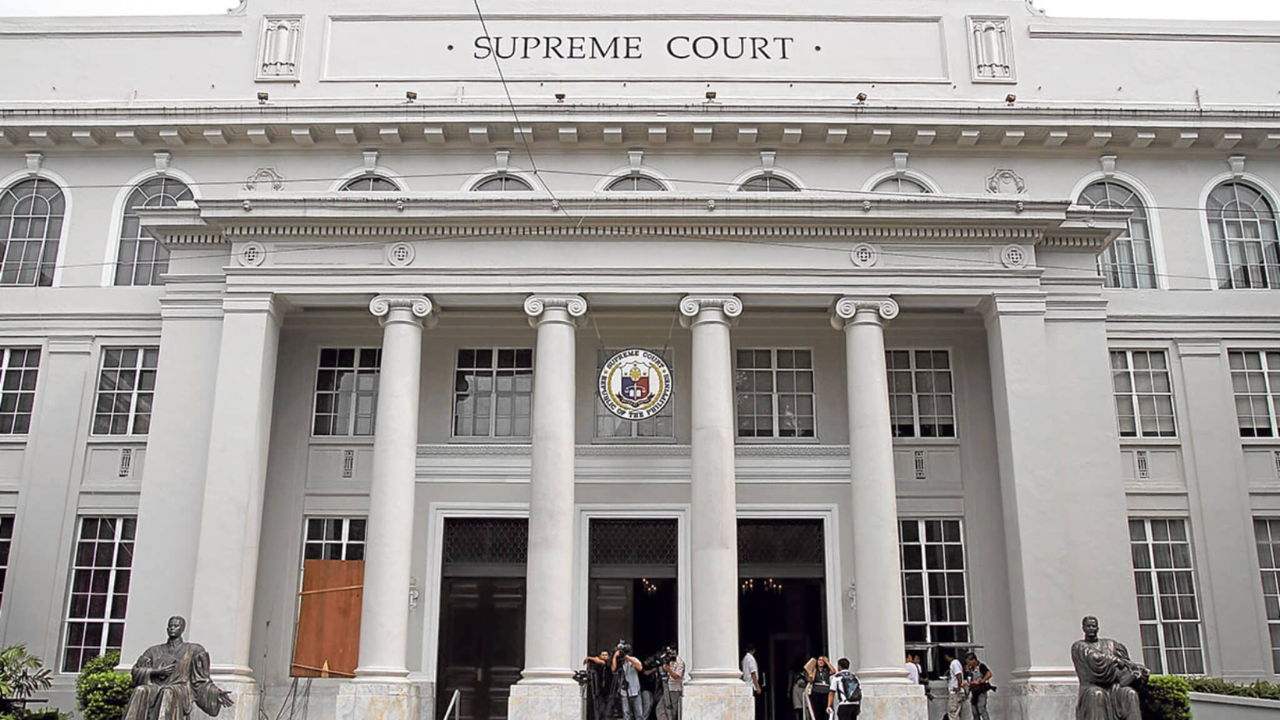
The Supreme Court (SC) has clarified that homeowners’ associations cannot prevent delinquent members from using subdivision roads and other common areas due to unpaid association dues, ruling that such restrictions violate the rights granted under Republic Act (RA) 9904, or the Magna Carta for Homeowners and Homeowners’ Associations.
In a decision issued by the SC Third Division, the High Court emphasized that while homeowners’ associations have the authority to sanction members who fail to pay association dues, the penalties imposed must remain within the limits prescribed by law.
The ruling stemmed from a dispute involving spouses Linley and Juvy Retirado, homeowners in La Costa Brava Subdivision located along the boundary of Bacolod City and Talisay City in Negros Occidental. Court records showed that the couple failed to pay association dues from 2016 to 2021, leading the La Costa Brava Homeowners’ Association Inc. (LCBHAI) to declare them delinquent members.
As a consequence, the association imposed several sanctions on the spouses. These included restrictions on certain services provided by the association, such as grass-cutting and maintenance activities within five meters of their property, unless requested by neighboring lot owners. Garbage collection services for the couple’s household were likewise reduced to once every two weeks.
Beyond service-related penalties, however, the association also implemented measures affecting access to the subdivision. Deliveries of food, packages, construction materials, appliances, cooking gas and similar items to the residences of delinquent homeowners were prohibited.
Guests of delinquent members were barred from entering the subdivision, while empty taxis, tricycles and ride-hailing vehicles were not allowed to enter to pick up residents who had unpaid dues. Delivery trucks transporting supplies and construction materials were also required to pay additional fees before being allowed access.
The Retirado spouses challenged the sanctions before the Human Settlements Adjudication Commission (HSAC), arguing that the measures unlawfully restricted their use of subdivision roads and common areas.
HSAC ruled in favor of the homeowners, finding that the association’s actions exceeded what is permitted under the law. The commission also imposed sanctions on the association’s officers.
The officers affected by the ruling were Reuben Mikhail Sabig, Christopher Siamundo, Ella Salcedo, Katherine Jallorina, Antonio Suganob, Cherrie Mae I, Davelyn Nuqui, Marilyn Gamboa and Robert Pascua, who served as officers of LCBHAI from 2017 to 2021.
The association officers elevated the case to the Court of Appeals (CA) 18th Division in Cebu City. However, the appellate court dismissed their appeal after determining that they failed to properly serve a copy of their petition on the homeowners’ legal counsel and did not submit the required proof of service by registered mail.
The Supreme Court upheld the dismissal and proceeded to address the substantive issues surrounding the rights of homeowners and the powers of associations under RA 9904.
In a 14-page decision penned by Associate Justice Alfredo Benjamin Caguioa, the SC explained that Section 7(a) of RA 9904 grants homeowners two separate rights. The first is the right to avail themselves of and enjoy basic community services and facilities. The second is the right to use common areas administered or maintained by the homeowners’ association, including subdivision roads.
According to the Court, the distinction is significant because the law treats these rights differently when a homeowner becomes delinquent in paying association dues.
The SC examined Section 22(b) of RA 9904, which allows associations to suspend certain community services and facilities for delinquent members. However, the provision does not authorize associations to restrict access to or use of common areas.
“While a homeowners’ association may deprive the delinquent association members of their right to avail themselves of or enjoy basic community services and facilities, it may not deprive the members of their right to use common areas, such as the roads,” the decision said.
The High Court further stressed that homeowners retain a “full right” to use common areas, including subdivision roads, for transportation and for the delivery of essential goods and services.
As a result, the Court ruled that restrictions on guests, ride-hailing services, taxis, deliveries and other forms of access that depend on the use of subdivision roads violated the provisions of RA 9904.
At the same time, the SC clarified that not all penalties imposed by the association were unlawful. Restrictions involving grass-cutting, maintenance services and garbage collection fall under basic community services and facilities, which may legally be suspended for delinquent members under the law.
The Court noted that the association’s violation arose when it went beyond suspending community services and interfered with homeowners’ rights to use common areas.
The Supreme Court ultimately affirmed the decisions of both the HSAC and the Court of Appeals. It also upheld the permanent disqualification of the nine association officers from holding office in LCBHAI, citing the seriousness of the violations.
According to the Court, the officers’ actions impaired homeowners’ access to roads for transportation and even affected the delivery of basic necessities, making the sanctions imposed against them warranted.
The ruling is expected to serve as an important guide for homeowners’ associations nationwide by clarifying the limits of their authority in enforcing the collection of association dues while protecting homeowners’ rights under the Magna Carta for Homeowners and Homeowners’ Associations.