
chevron_left
-
 play_arrow
105.1 TMC 105.1 TMC
-
 play_arrow
Cebu Calling Podcast Kuya Magik
music_note
Cebu honors Rizal with calls against corruption, moral decline
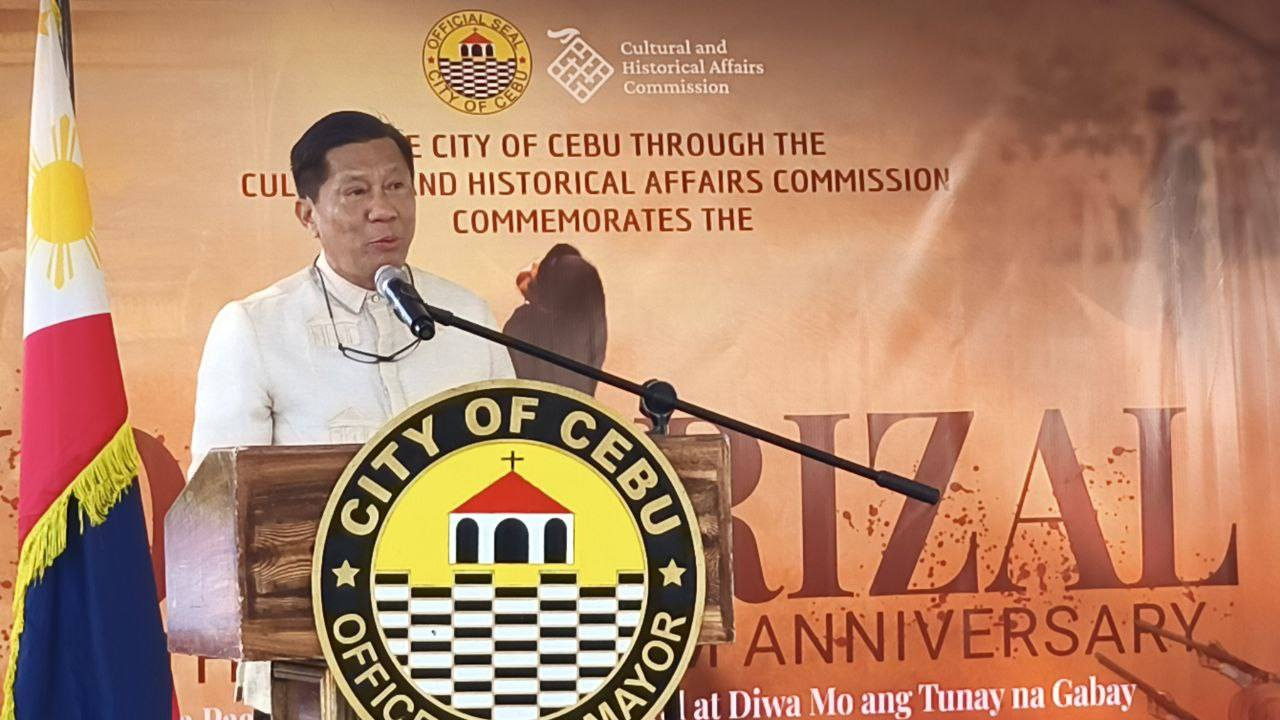
Cebuano officials, members of uniformed services, and civic groups commemorated the 129th anniversary of the martyrdom of Dr. Jose Rizal, using the occasion to call for renewed action against corruption, public apathy, and the erosion of moral values.
The Rizal Day rites were held on December 30 in Cebu City, where participants honored the national hero’s life and sacrifice through a wreath-laying ceremony and messages reflecting on the relevance of his teachings in contemporary times.
This year’s commemoration carried the theme “Rizal: Sa Pagbangon ng mga Mamamayan, Aral at Diwa Mo ang Tunay na Gabay,” emphasizing Rizal’s ideals as a guide for national renewal.
Central Visayas Regional Commander Edison delos Angeles read the message of outgoing Supreme Commander Raymondo del Rosario, KGCR, who underscored that Rizal’s principles remain urgently relevant more than a century after his execution.
“We gather today in spirit across global communities to commemorate the 129th anniversary of the martyrdom of Jose Rizal,” the message read. It added that the path toward national and moral recovery “remains anchored in the life of our national hero.”
Del Rosario warned that the “social cancer” identified by Rizal—apathy, greed, and the erosion of values—continues to persist and poses serious risks to society, particularly among the youth.
“Corruption remains a persistent parasite draining the resources and hope of the people, while moral decay often masquerades as a modern pragmatism,” the message said.
He stressed that such problems are not limited to governance failures but are symptoms of a deeper moral and spiritual crisis.
“To truly honor Rizal, we must move beyond floral offerings and begin the difficult work of internalizing his virtues to forge our collective identity,” the message added.
Del Rosario further called on Filipinos to draw inspiration from Rizal’s example, urging the public to “stay curious, remain principled, and never allow your idealism to be extinguished by the cynicism of age.”
Cebu City Mayor Nestor Archival, who led the local commemoration, said Rizal Day serves as a reminder that patriotism begins at the community level.
“As we honor Dr. José Rizal, we are reminded that love of country begins with love for our community,” Archival said in his message.
The mayor linked the city government’s development agenda to Rizal’s vision of progress grounded in education, integrity, and peaceful reform.
Archival said his administration’s goal of building a “Smart, Sustainable, and Inclusive Cebu City” aligns with Rizal’s ideals of shared opportunity and inclusive growth.
“In Cebu City, may Rizal’s ideals of integrity, education, and peaceful reform guide us as we move forward with Cebu City 2035—a vision of a sustainable, smart, and inclusive city where progress is shared by all and no one is left behind,” he added.
The Cebu City rites formed part of the nationwide observance of Rizal Day, which was led by President Ferdinand R. Marcos Jr. at the Rizal National Monument in Luneta, Manila.
The national ceremony was attended by National Historical Commission of the Philippines (NHCP) Chair Regalado Trota Jose Jr., Manila Mayor Francisco “Isko Moreno” Domagoso, and officials from various national and local government agencies, uniformed services, civil society groups, and members of the Diplomatic Corps.
Simultaneous flag-raising and wreath-laying ceremonies were also conducted at key historical sites associated with Rizal, including the Rizal Shrine in Calamba City, Laguna, his birthplace, and the Rizal Shrine in Dapitan City, Zamboanga del Norte, where he was exiled.
Similar activities were held at Rizal monuments in cities and municipalities across the country, with national flags flown at half-staff in observance of the day.
Dr. Jose Rizal, a physician, writer, and reformist, was a leading figure of the Propaganda Movement that sought peaceful reforms during the Spanish colonial period.
He was executed by firing squad on December 30, 1896, at Bagumbayan, now known as Rizal Park, after being accused by Spanish authorities of inciting rebellion through his writings.
Rizal’s novels Noli Me Tangere and El Filibusterismo exposed corruption, abuse, and social injustice under colonial rule, contributing to the awakening of Filipino national consciousness and inspiring the broader struggle for independence.
In 1898, President Emilio Aguinaldo declared December 30 a National Day of Mourning in honor of Rizal and other Filipinos who sacrificed their lives for freedom.
Since then, Rizal Day has been observed annually, serving as a reminder of the enduring relevance of Rizal’s ideals and the continuing responsibility of Filipinos to uphold the values he championed.
AD
Latest posts
Cebu Hit-and-Run Driver Secures Bail, Remains Under Hospital Arrest

Driver tests negative for alcohol in Banilad hit-and-run that killed young entrepreneur; CCCI calls for road safety reforms

PH Rolls Out Satellite-to-Phone Connectivity With Globe, Starlink

Baricuatro Rejects Claims Linking Her to Enad Suspension
Current show
Upcoming shows