


chevron_left
-
 play_arrow
105.1 TMC 105.1 TMC
-
play_arrow
Cebu Calling Podcast Kuya Magik
Cebu City remains unprepared to immediately divert its garbage to Aloguinsan and Toledo as alternative disposal sites following the closure of the Binaliw landfill, with city officials still assessing the financial and logistical implications of hauling waste outside the city.
Mayor Nestor Archival said on Friday, January 30, 2026, that the City Government is continuing to reorganize its budget and evaluate hauling and tipping fees before committing to transporting garbage to other local government units.
“For the meantime, dili pa ta ready (we are not yet ready),” Archival said, noting that the city is still calculating the total cost of diverting waste to Aloguinsan, including tipping fees and transportation expenses.
According to the mayor, hauling costs are being broken down into two major components: the transport of garbage from barangays to a designated transfer station, and the subsequent hauling from the transfer station to the landfill. These figures, he said, have yet to be finalized.
At present, Cebu City continues to operate a temporary transfer station at Carbon Market, which also houses shredding machines used to reduce the volume of waste sent to landfills.
The facility processes biodegradable and plastic waste to lessen the amount of garbage that ultimately requires disposal.
Aloguinsan and Toledo were earlier identified by the Cebu Provincial Government as possible temporary disposal sites after the January 8 collapse at the Binaliw landfill, which resulted in dozens of fatalities and disrupted the city’s primary waste disposal system.
On January 28, Cebu Governor Pamela Baricuatro announced that Aloguinsan Mayor Cesare Ignatius “Ig-Ig” Moreno had agreed to temporarily accept Cebu City’s garbage, with the San Rafael Sanitary Landfill designated as the disposal site.
However, Archival emphasized that Cebu City could not proceed without clearly defined cost parameters.“We are looking at how much it will really cost, considering the amount we have in the budget,” he said.
The Department of Public Services, which oversees waste management operations, has an approved annual budget of about P500 million. Archival said the city must ensure that any new hauling arrangement remains financially sustainable within this allocation.
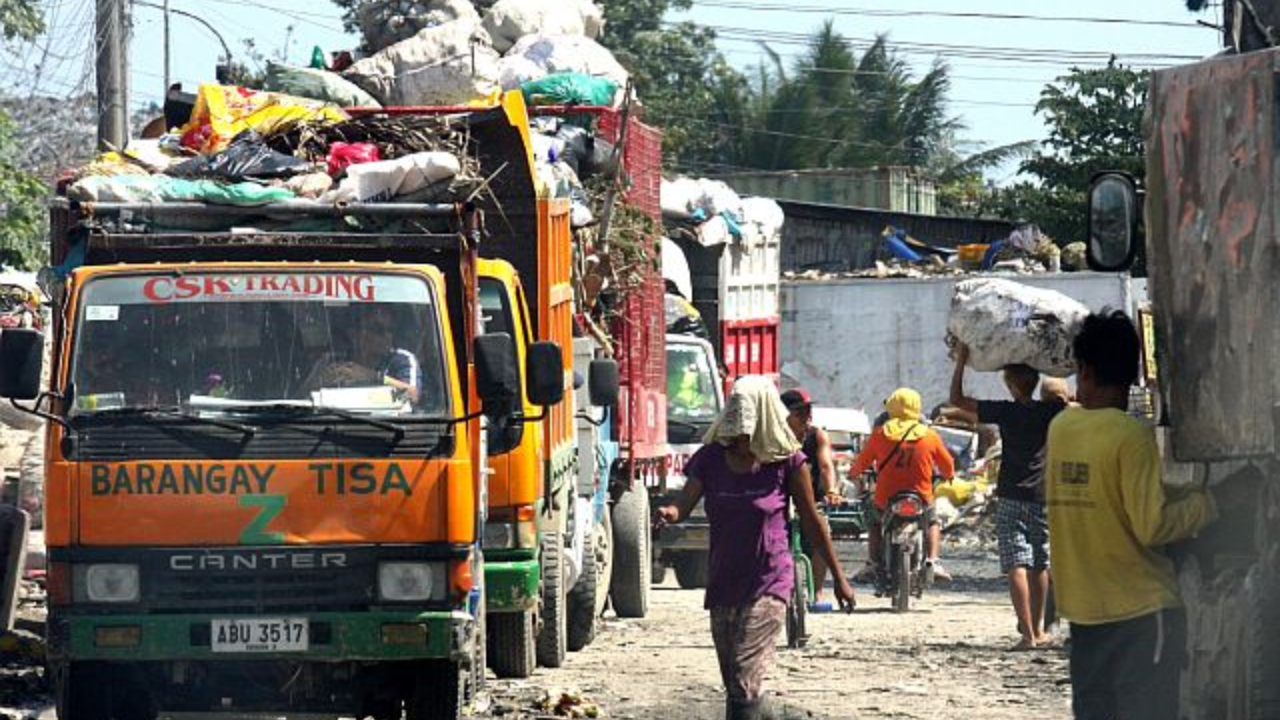
For the meantime, Cebu City will continue transporting its garbage to Consolacion, extending its current arrangement until March 31.
Archival said the city is aiming to be ready to send waste to Aloguinsan by April, once issues related to costing, logistics, and funding are resolved.
“The fight here is in the city,” he said, stressing that Cebu City must focus on reducing the volume of waste it generates to help offset the higher cost of hauling garbage to more distant landfills.
City officials have identified waste reduction as a critical component of managing the post-Binaliw situation.
The operation of the Carbon Market transfer station and shredding facility is intended to cut down landfill-bound waste by processing biodegradable materials and plastics before hauling.
Meanwhile, Toledo City is also not yet prepared to receive Cebu City’s garbage, with local officials indicating that preparations may only be completed by April.
Provincial Administrator Ace Durano said that garbage hauling operations under the provincial government will initially prioritize waste generated by provincial facilities affected by the Binaliw closure.
Disposal will be carried out on a scheduled basis or limited to volumes of up to 100 cubic meters per delivery.
In Aloguinsan, preparations are also underway for the installation of a waste-to-energy facility, which provincial officials have described as a potential long-term solution to the region’s waste management challenges.
However, the project remains subject to approval by the Department of Science and Technology and the Department of Environment and Natural Resources (DENR).
Archival said Cebu City has access to P30 million from disaster funds following the declaration of a state of calamity after the Binaliw tragedy. Still, he stressed the need to clearly define when and for how long these funds can be utilized.
“Ang ato lang is klarohon kung kanus-a magamit ug kanus-a ta kutob (We just need to clarify when it can be used and how long we can use it),” he said.
In the wake of the Binaliw landfill collapse, the DENR has ordered a nationwide inspection and review of all operating sanitary landfills to prevent similar incidents elsewhere.
Cebu City officials said the outcome of these inspections, along with the resolution of funding and logistical concerns, will play a key role in determining the city’s next steps in addressing its waste disposal crisis.